Philippine Arena Guide: How to Get There, Parking, Bag Policy & Seat Plan
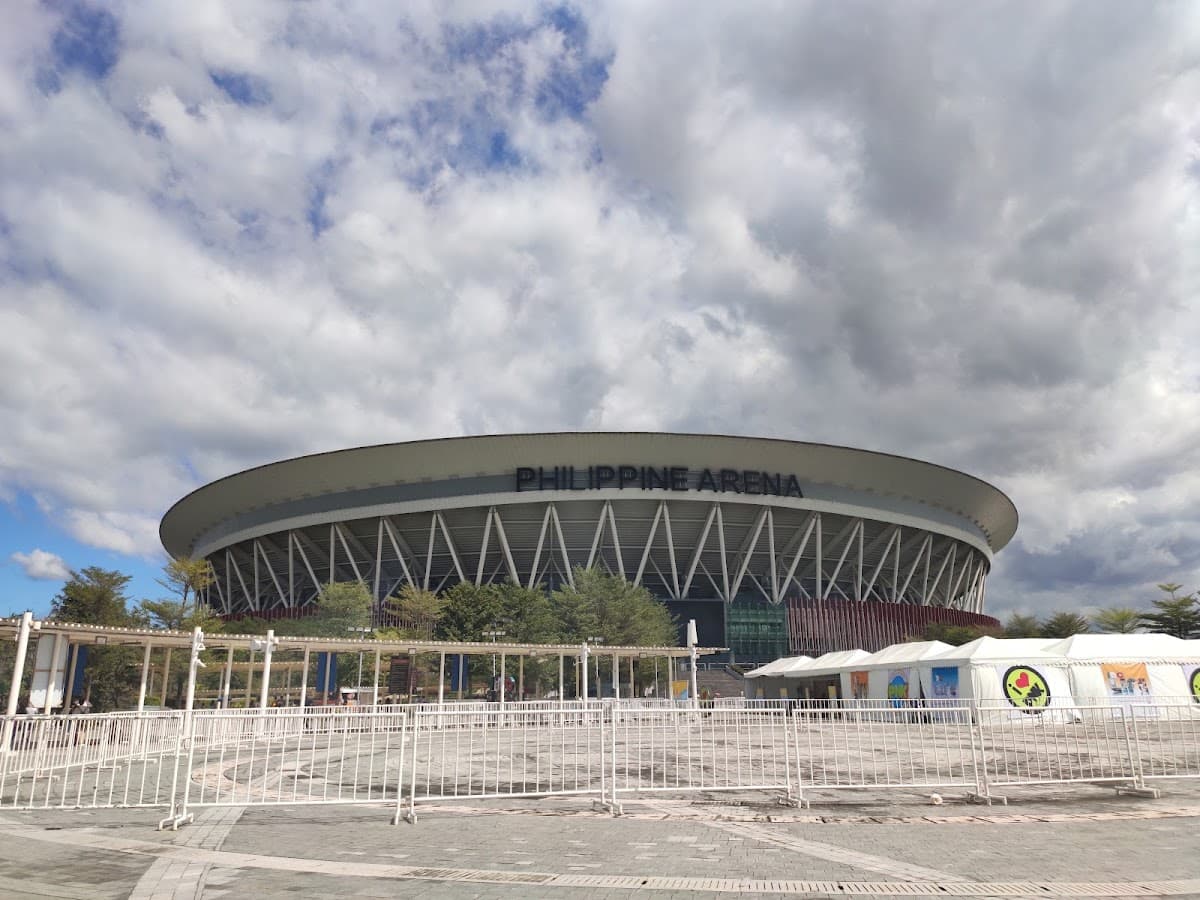
The Philippine Arena in Bocaue, Bulacan is the largest indoor arena in the world, with a capacity of roughly 55,000. It was built by the Iglesia ni Cristo and opened in 2014, and it is where the country puts the events that simply will not fit anywhere else: stadium-scale international tours, the SEA Games opening ceremony, and the occasional massive religious gathering.
Going to a show here is a genuinely different proposition from a night at MOA Arena or the Big Dome. It is outside Metro Manila, there is no train, and the scale of the building means the difference between a good seat and a bad one is measured in hundreds of metres. Plan accordingly.
See what is coming up: upcoming events at Philippine Arena →
Quick facts
| Address | Ciudad de Victoria, Bocaue, Bulacan |
| Opened | July 2014 |
| Capacity | ~55,000 — the world's largest indoor arena |
| Distance from Manila | ~30–40km north, via NLEX |
| Nearest rail | None. Road access only |
| Parking | Very large on-site lots within Ciudad de Victoria |
How to get there
By car, which is what most people do: take NLEX northbound and exit at Bocaue. Ciudad de Victoria is signposted from there. Off-peak the drive from Quezon City is around 45 minutes to an hour; on a sold-out event day, two to three hours is realistic, and the queue to get off the expressway itself can be an hour of that.
By bus, take any Bulacan-bound provincial bus from Cubao or Balintawak and ask to be dropped at Bocaue or Ciudad de Victoria, then take a tricycle for the last stretch. This is cheap and works well outbound; getting back late at night is much harder.
By organised shuttle. For big concerts, promoters frequently run shuttles from points in Metro Manila — commonly Trinoma, MOA, or Araneta. These are usually the single best option: you skip the parking, and the return trip is guaranteed. They sell out, so book when the show is announced rather than in show week.
There is no train. Any route you plan ends with a road journey.
Parking
On-site parking is enormous, which is the upside. The downside is that leaving is slow — 55,000 people exiting into a small number of provincial roads takes time, and 60 to 90 minutes to clear the lot after a full house is normal.
Park facing outward if you can, and know which exit you came in by. Phone signal in the lots can be patchy when the crowd peaks, so agree a physical meeting point with your group rather than relying on messaging.
Where to sit
At this scale the tier you buy changes the experience completely, not just the view.
| Tier | Roughly where | Typical band | Worth knowing |
|---|---|---|---|
| VIP / Floor | Flat floor in front of stage | ₱10,000–₱25,000+ | The only tiers where you see faces rather than screens |
| Lower Box | First bowl, closest ring | ₱5,000–₱12,000 | Good compromise: elevated, still within reasonable distance |
| Upper Box | Second bowl | ₱2,000–₱6,000 | You are watching the screens. Fine for the atmosphere |
| General Admission | Furthest sections | ₱1,000–₱3,000 | Enormously far from the stage. Go for the event, not the view |
If seeing the performer matters to you, buy floor or lower box here. In the upper reaches of a 55,000-seat room, the stage is a distant rectangle and the video wall is the show.
Bag policy and what to bring
Security is thorough and the queues at 55,000 capacity are long. Standard prohibitions apply: no outside food or drink, no professional cameras, tripods, or GoPros, no vapes, no umbrellas, small bags only.
Two things specific to this venue: bring cash, because network congestion makes card payments unreliable when the building is full, and bring a power bank, because you will be out for a very long day. A light jacket is worth having for the drive home.
Full checklist: what to bring to a concert.
Food and drink
There are concession stands inside and food options within Ciudad de Victoria, but the ratio of stands to people is poor and queues are long. Unlike MOA Arena, there is no mall next door to fall back on. Eat properly before you arrive, or plan to eat on the road.
Getting home
This is the part people underestimate. After a sold-out show you are one of tens of thousands trying to leave a provincial site with limited road capacity, at an hour when public transport back to Metro Manila is thin.
- If you drove: expect to sit in the lot. Bring water.
- If you took a shuttle: find your bay before the encore, not after.
- If you came by public transport: have a confirmed plan for the return leg before you commit. Ride-hailing coverage out in Bocaue late at night is unreliable, and standing on the roadside at 1am hoping for a bus is a bad evening.
FAQ
How far is Philippine Arena from Manila? Roughly 30 to 40km north via NLEX. Budget 45 to 60 minutes off-peak, and two to three hours on a major event day.
Is there a train to Philippine Arena? No. Access is by road only — car, provincial bus, or an event shuttle.
Are shuttles available? Frequently, for big concerts, from points like Trinoma, MOA, and Araneta. They are announced with the show and sell out early.
Is it worth buying general admission? Only if you are there for the occasion rather than the performance. At 55,000 capacity the far sections are a very long way from the stage.
Where do I buy tickets? It varies by promoter — SM Tickets and TicketNet both handle events here. Check the official announcement for your specific show rather than assuming.
Can I bring food? No outside food or drink is permitted.
What time should I leave home? For an 8pm show, leaving Metro Manila by 3 to 4pm is not excessive on a sold-out night.
Last verified: August 2026. Ticketing outlets, shuttle arrangements, and gate rules are set per event — confirm with the promoter before travelling.
Compare with the rest of Metro Manila's concert venues, or see all upcoming concerts.